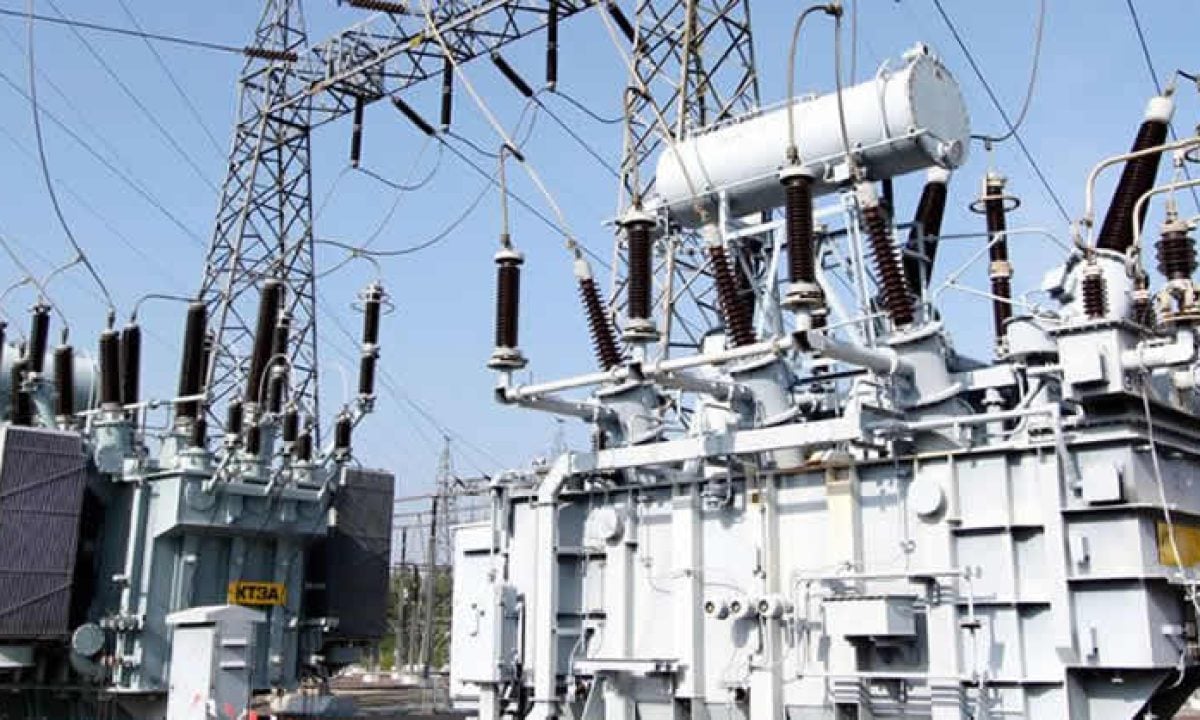
The Federal Government has revealed plans to share the cost of electricity subsidies with state and local governments starting in 2026, ending the exclusive financial burden on the federal level.
Director-General of the Budget Office of the Federation, Tanimu Yakubu, disclosed this while delivering a keynote address at a training and sensitisation workshop for Ministries, Departments, and Agencies (MDAs) on Monday, February 2, 2026, in Abuja.
The workshop focused on the 2026 post-budget preparation process, using the Government Integrated Financial Management Information System (GIFMIS) Budget Preparation Sub-System.
Yakubu explained that the President wants electricity subsidy costs to be clear, practical, and transparent, emphasizing that no government tier should carry hidden or unpaid obligations.
Highlighting the purpose of the new directive, Yakubu clarified that it is not punitive but a step toward alignment. He added that the approach could encourage all levels of government to support cost-reflective efficiency and a reliable power market.
He said, “If we want a stable power sector, we must pay for the choices we make. When tariffs are held below cost, a gap is created. That gap is a subsidy. And a subsidy is a bill.”
Yakubu further stated that from 2026, the Federal Government will no longer consider electricity subsidies as an open-ended obligation solely for the centre, especially where policy decisions and political gains are shared.
“In 2026, we will stop pretending that this bill can be left to the Federal Government alone, especially where the policy choice or the political benefit is shared across tiers of government,” he said.
He added that the President has directed the use of the existing electricity sector legal framework to ensure subsidy sharing is practical, transparent, and enforceable.
“This means subsidy costs must be explicit, tracked, and funded, so they do not return as arrears, liquidity crises, or hidden liabilities in the market. If any tier of government chooses affordability interventions, the funding responsibilities must be clear, agreed, and enforceable,” Yakubu said.
He reiterated, “This is not punishment. It is alignment. When everyone carries a fair share of the cost, everyone also has an incentive to support cost-reflective efficiency, targeted protection for the vulnerable, and a power market that can actually deliver.”
Yakubu also urged MDAs to fully disclose all subsidy-related costs in their 2026 budget submissions and to avoid transferring unfunded liabilities into the electricity market.
In response, the Director of Media and Communications at the Nigerian Governors’ Forum (NGF), Yunusa Abdullahi, said yesterday: “We are reviewing the context and content of the information. We will not be making further comments on it.”
Similarly, State Electricity Regulatory Commissions (SERCs) from Lagos, Imo, Enugu, Ekiti, Oyo, Ondo, Edo, Niger, and Anambra held an emergency virtual meeting to assess the decision and determine appropriate actions.
An SERC member, who requested anonymity, explained, “We cannot make our official position known immediately. We are hearing it for the first time and currently meeting to review it. We need to understand the issue before responding or reacting to it.
“The government has taken appropriate steps recently to stimulate the sector by deregulating activities and enabling states to play active roles. But we need to examine this decision and understand its implications, not just for the states but for the entire power sector.”
