
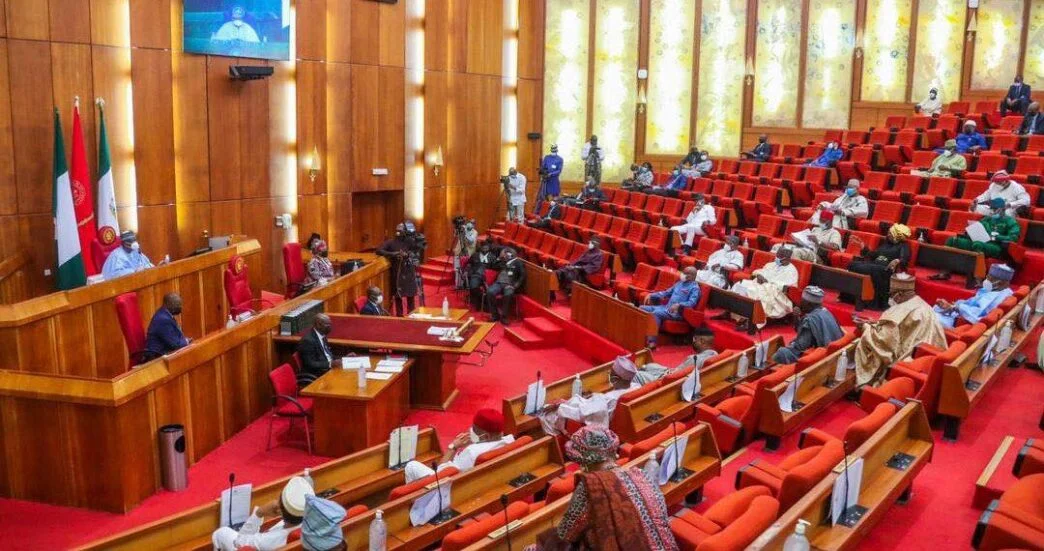
The Senate has given reasons for dropping the mandatory “real-time” electronic transmission clause from Clause 60(3) of the Electoral Bill 2026. Lawmakers said Nigeria’s electricity and internet networks are not yet strong enough to support such a rule without risking disruptions and possible post-election unrest.
Senate Leader Opeyemi Bamidele, in a statement, said the decision came after long discussions with experts in the power and communications sectors.
The disputed clause had required presiding officers to “electronically transmit the results from each polling unit to the IReV portal in real time” after signing and stamping Form EC8A.
But the Senate decided to remove the words “real time,” keeping electronic transmission but allowing flexibility on when results are sent.
Bamidele said the move followed what he called an “inquisition into the other side of the clause,” as public interest in the matter rose ahead of the 2027 general election.
“I have been inundated with messages from concerned and respected stakeholders seeking clarification on why the Senate retained Section 60(3 & 5) of the Electoral Act 2022. We recognise the strength of the clause and its potential to deepen trust. But lawmaking must respond to reality, not sentiment,” he said.
He added that Section 62(2) of the Electoral Act 2022 already ensures that election results are sent to the INEC Result Viewing Portal (IReV) through the National Electronic Register of Election Results.
Bamidele explained that forcing strict real-time transmission without fully adopting electronic voting would be unnecessary and could cause instability.
He stressed the difference between electronic transmission and electronic voting, noting that transmission involves uploading manually counted results via the Bimodal Voter Accreditation System (BVAS) after results are declared at polling units, while electronic voting means digitally casting and counting ballots—a stage Nigeria has not yet reached.
“As of today, we are not yet at the stage of electronic voting considering the state of our digital infrastructure,” he said.
