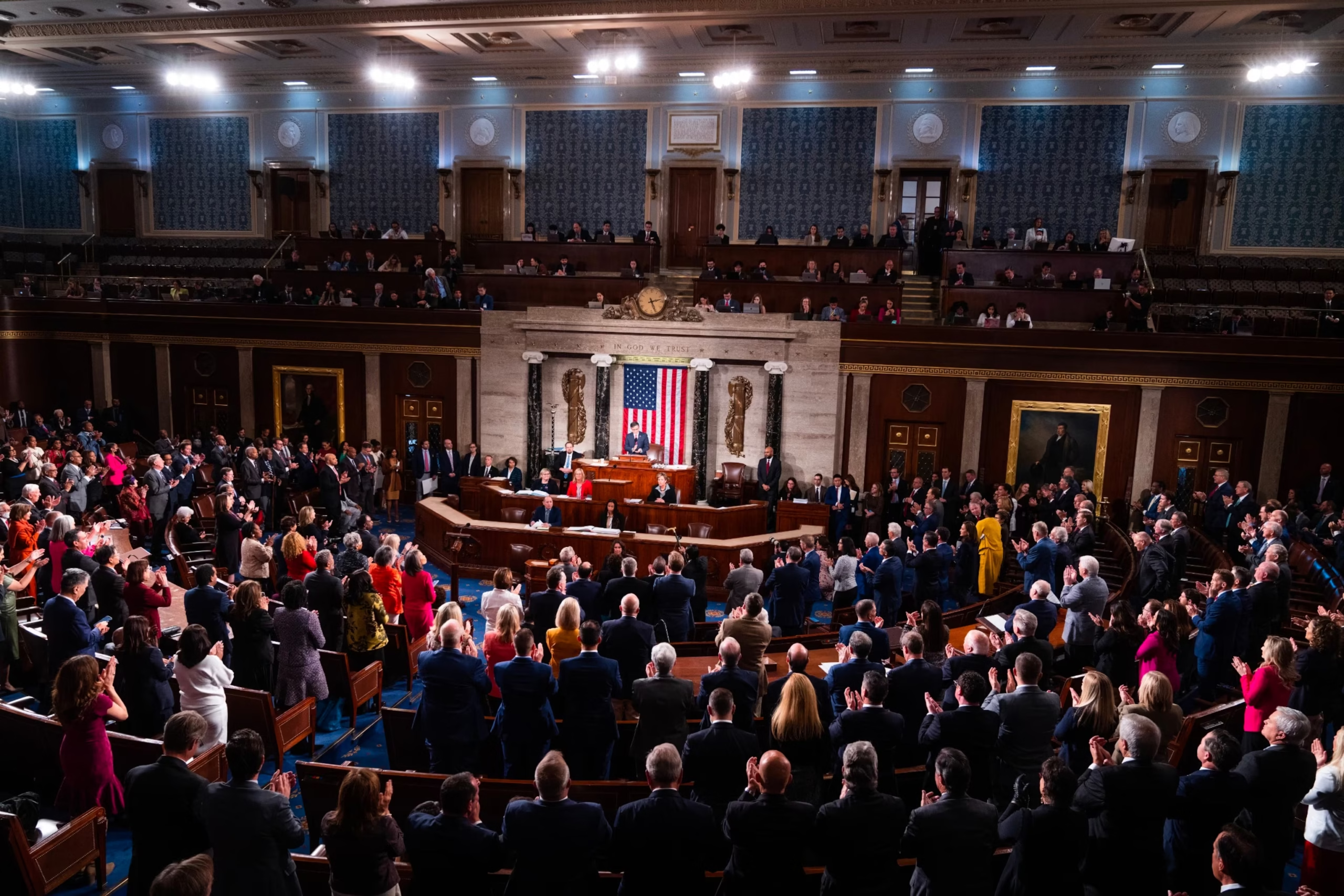
The United States Congress has moved to block part of its foreign aid to Nigeria over claims linked to the killing of Christians, as Nigeria’s federal authorities come under closer review in Washington.
The House Appropriations Committee this week passed its Fiscal Year 2027 State Department funding bill. In Section 7042, it states that 50 percent of all funds meant for Nigeria’s central government will not be released until the U.S. Secretary of State confirms to Congress that Nigeria is taking real steps to stop violence and ensure those responsible are held accountable.
The bill also says Nigeria must put more effort into helping victims, including internally displaced persons. It calls for the safe return of affected communities, rebuilding of destroyed areas, and proper funding to deal with the crisis.
It further directs that any U.S. funds should be matched and used for prevention efforts. This includes early warning systems, promotion of religious freedom, investigations and prosecutions involving Fulani militia groups, jihadist terror groups and criminal gangs, as well as humanitarian support for victims of conflict.
Nigeria is also listed under strict country notification rules, meaning no funds can be spent without formal approval from congressional committees.
This development comes as the Nigerian government faces questions over a $9 million lobbying deal in Washington with DCI Group. The contract was arranged through National Security Adviser Nuhu Ribadu and a Kaduna-based law firm, Aster Legal, at $750,000 monthly, making it one of the most expensive African lobbying deals.
Instead of reducing pressure, the lobbying effort coincided with lawmakers merging three Nigeria-related bills into one: the Nigeria Religious Freedom and Accountability Act of 2026.
Tensions increased after an Easter Sunday attack in Ariko, about 60 miles north of Abuja, where armed men killed seven worshippers and kidnapped 68 people during a church service. Thirty-seven remain missing, with at least 33 of them women.
Rep. Moore, leading the investigation under President Trump’s direction, said: “This genocide is why I fought to ensure that the State Department funding bill makes U.S. security assistance contingent on the Nigerian government stopping the slaughter of its Christian citizens. Abuja is not meeting that standard,” he said.
The U.S. Commission on International Religious Freedom has also recommended Nigeria again be named a Country of Particular Concern for 2026, the 17th such call.
The Federal Government continues to reject claims of genocide, saying Nigeria’s security problems are broader and not limited to religious persecution.
The bill still requires approval from the full House before it can become law.