
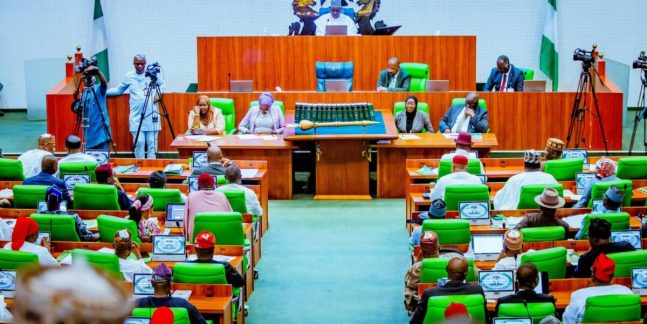
The House of Representatives on Thursday passed a constitutional amendment bill to create state police across Nigeria, a major step in the long debate on decentralising policing and improving security.
The bill, titled “A Bill for an Act to Alter the Constitution of the Federal Republic of Nigeria, 1999 to Provide for the Establishment of State Police and for Related Matters (Sixth Alteration) Bill, 2026,” was approved at the Committee of the Whole chaired by Speaker Tajudeen Abbas.
Deputy Speaker Benjamin Kalu, who leads the Constitution Review Committee, presented the report and pushed for support, saying decentralised policing is needed to tackle rising security problems.
Voting was done manually. Lawmakers raised their hands. In the end, 289 voted in favour, one abstained, and none voted against it.
The amendment creates both Federal and State Police. It changes Section 214 of the Constitution and allows the National Assembly to set structure, duties, and minimum standards.
State police will only begin after a state passes its own law and is certified as meeting national standards. Until then, the Federal Police will continue operating in those states.
Federal intervention in states will only be allowed in cases of total breakdown of law and order, at a governor’s request, or when state police fail due to administrative, financial, or operational issues.
Under Section 215, the Inspector-General of Police will be appointed by the President on advice of the Nigeria Police Council, from the Federal Police, and confirmed by the National Assembly. State Commissioners will be appointed by governors, also on council advice, and confirmed by state assemblies.
Governors can give lawful instructions to state police, but disputes will be settled by the Nigeria Police Council, whose decision is final.
The bill now moves to the Senate, then to state assemblies for approval by two-thirds, and finally to the President for assent.
If passed into law, it would introduce a multi-layer policing system aimed at tackling banditry, terrorism, kidnapping, and other violent crimes.