
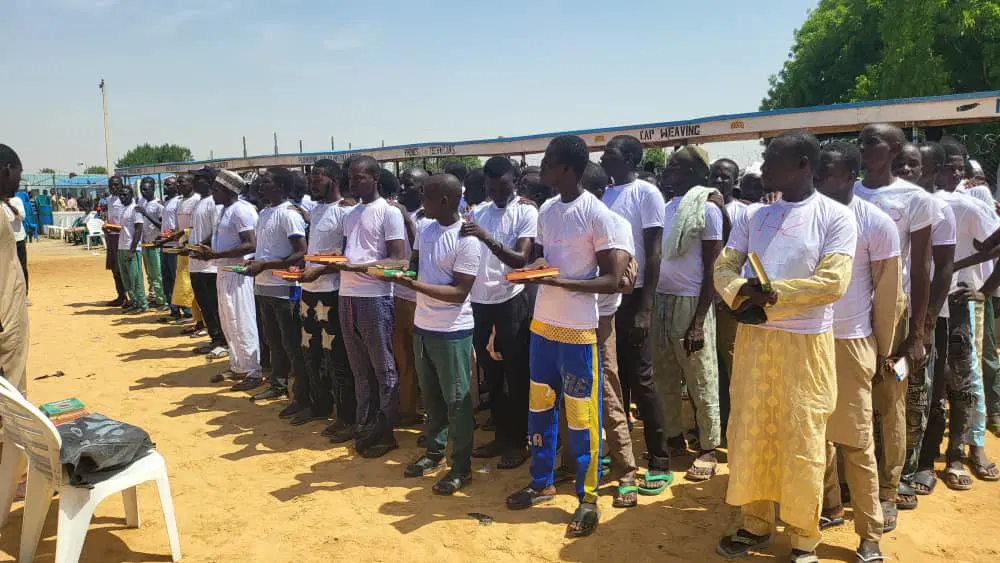
The Borno State Government has reintegrated 720 men, 992 spouses and 2,050 children who surrendered under its non-kinetic peacebuilding framework, known as the “Borno Model.”
The beneficiaries, identified as Batch 9 low-risk and minor clients, were formally released at a ceremony held at the Hajj Camp in Maiduguri after completing deradicalisation, disarmament, rehabilitation and vocational training.
Officials said the programme is part of efforts to strengthen peace in the North-East by reintegrating repentant insurgents who voluntarily surrendered to security forces.
Speaking at the event, the Special Adviser to Governor Babagana Zulum on Security, Brigadier General Abdullahi Ishaq (Rtd), described the initiative as a major step in the state’s non-kinetic counterterrorism strategy.
He said thousands of people have passed through the programme since it began in July 2021, receiving rehabilitation and skills training to help them return to society.
According to Ishaq, participants took part in religious education, counselling, hygiene and drug awareness sessions, alongside training in tailoring, carpentry, metalwork, phone repairs, solar installation and other technical trades.
He added that women were trained in soap making, knitting, catering services and tailoring, while starter packs were provided to support their resettlement.
Ishaq said more than 9,600 people have been reintegrated through nine batches. Beneficiaries came from Bama, Gwoza, Damboa, Mafa, Dikwa, Marte, Monguno, Kukawa and other local government areas after screening by community leaders and security agencies.
The Commissioner for Women Affairs and Social Development, Hajiya Zuwaira Gambo, represented by Permanent Secretary Babagana Kadai, said the programme shows the government’s commitment to restoring peace, rebuilding lives and promoting social cohesion.
Security officials, religious leaders and community representatives urged the beneficiaries to remain law-abiding. Some of those reintegrated expressed gratitude for being accepted back into society and said they were rebuilding their lives while contributing to community development.
