
The Federal Government has announced plans to end the long-running policy that separates junior secondary schools from senior secondary schools after revealing that more than 20 million pupils drop out before reaching senior secondary education.
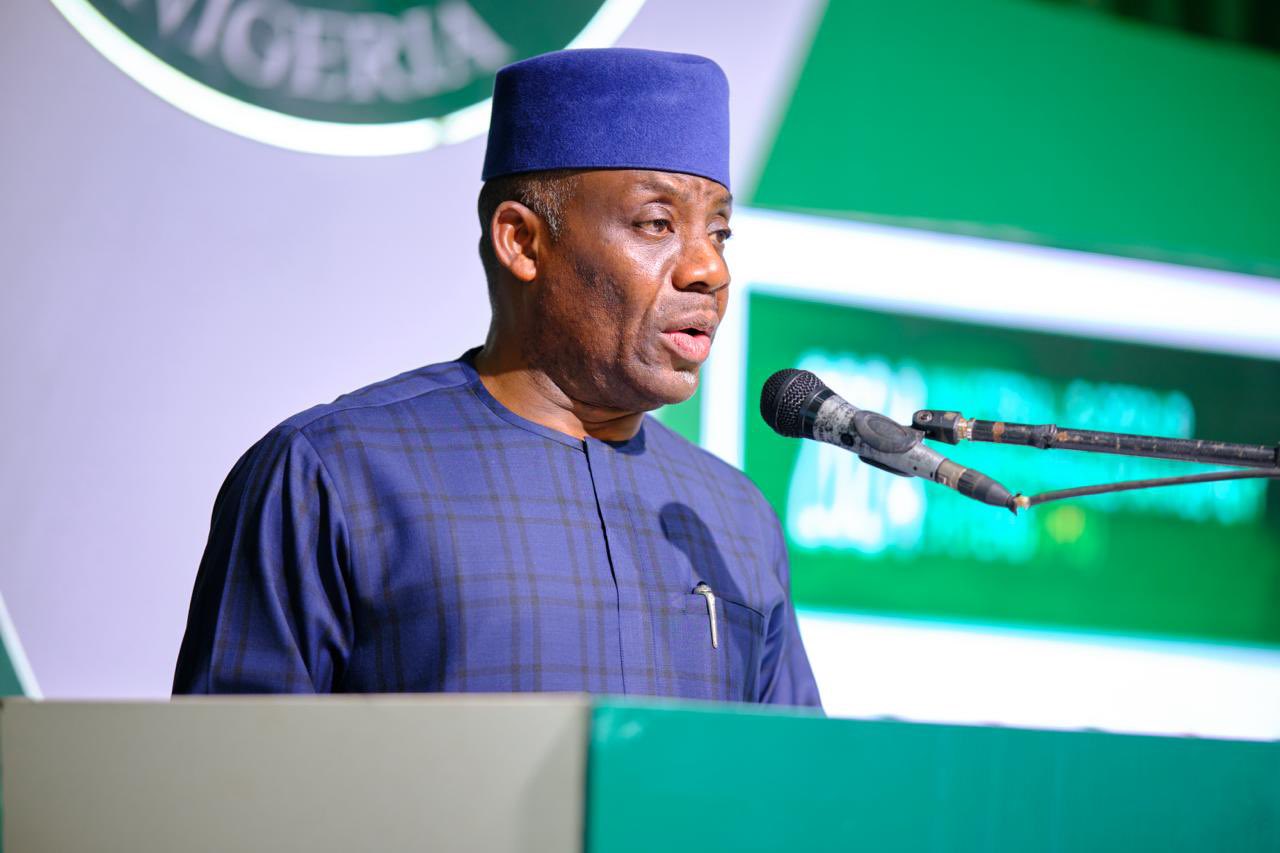
Minister of Education, Dr Tunji Alausa, made the announcement on Tuesday in Abuja during the inauguration of the Universal Basic Education Commission Ministerial Implementation and Monitoring Committee.
He said the policy, which created separate administrative structures for junior and senior secondary schools, had failed and made access to education worse.
According to Alausa, findings showed a major gap between the number of primary schools and junior secondary schools across the country, making it difficult for millions of children to continue their education.
“We have 20 million dropouts from primary school to junior secondary school. Where are those students? We also found we have 80,000 public primary schools and only about 15,000 junior secondary schools. That’s a one-to-eight ratio,” he said.
He said the shortage of junior secondary schools had led to overcrowded classrooms, while many senior secondary schools remained underused.
The JSS-SSS structure was introduced in 1982 under the National Policy on Education, widely known as the 6-3-3-4 system, which was first introduced in 1977.
The minister said, “This disarticulation policy has failed. We will phase it out. We can’t create positions because we want to create a director-level position for people while we harm our education system. It’s about doing what is best for every Nigerian child,” he added.
Alausa said the proposal would be presented at the next meeting of the National Council on Education for approval. He added that the reform is part of wider efforts to improve access to education and learning outcomes.
“This government will not fail. We are fixing it,” he said.
Speaking later at the Federal Ministry of Education and Universal Basic Education Commission Roundtable Convening Meeting on Digital Resources Available to Achieve Learning Outcomes, Alausa also raised concern over the country’s learning crisis.
“Learning poverty means that by the age of 10, a child cannot read and understand an age-appropriate text.
“In Nigeria today, three out of every four children are learning poor. That is simply unacceptable,” Alausa added.
He said the figures showed the urgent need to improve teaching through digital technology.
“We don’t have a choice. We have to use technology. It is no longer feasible to continue to do things manually. Digital learning is the future, and we must deploy it to every part of the country, including the most rural communities,” he said.
The minister urged state governments to make better use of digital learning platforms already developed by the Federal Government, including the Nigeria Learning Passport, Inspire, Ignite, EduRevamp, E-Learn, the Greenfield Learning Management System and virtual classroom solutions.
He said the platforms offer lessons that follow the national curriculum and are taught by some of the country’s best teachers. They can also help schools facing shortages of teachers in subjects such as Mathematics, English Language, Physics and Chemistry.
According to him, schools without subject teachers can connect students to live or recorded virtual lessons and allow learners to interact with teachers online.
Despite the investment, Alausa said the platforms were still not being widely used. He noted that the Nigeria Learning Passport has about 2.3 million users, far below the country’s estimated 67 million learners in primary, junior secondary and senior secondary schools.
“This is still extremely low. We have invested significant resources in these platforms. If they are not used, then it becomes a wasted investment. We cannot continue to suffer in the midst of plenty,” the minister added.
He praised the United Nations Children’s Fund for supporting the Nigeria Learning Passport, saying it helped sustain learning during the coronavirus pandemic and later supported children affected by insecurity and school closures.
Alausa also inaugurated a ministerial implementation and monitoring committee, led by Prof Rashid Aderinoye, to oversee Universal Basic Education Commission-funded smart schools, bilingual schools and alternative schools nationwide.
The committee will ensure the projects are completed, handed over to state governments and opened for learning.
He said many of the schools remain unfinished or have not admitted learners despite huge public investment, describing the situation as an unacceptable waste of public resources.
Earlier, Executive Secretary of the Universal Basic Education Commission, Dr Aisha Garba, said technology is now essential for building an inclusive, resilient and future-ready education system.
She said the commission has established digital learning centres in primary and junior secondary schools, deployed smart interactive boards, improved education data systems and introduced digital monitoring and evaluation platforms.
Garba added that the commission has also inaugurated Digital Champions to support state governments in rolling out education technology initiatives.
She said technology alone cannot improve education without proper coordination, strong partnerships, continuous capacity building and the willingness of stakeholders to embrace innovation.
Garba expressed confidence that the partnership between the Federal Ministry of Education, the Universal Basic Education Commission, state governments and development partners would speed up the use of digital learning resources and improve learning outcomes across the country.
Nigeria has one of the world’s largest populations of out-of-school children, with millions of school-age children, especially in rural, poor and conflict-affected communities, still unable to access or complete basic education.
Education experts have long blamed weak transition from primary to junior secondary school, poor infrastructure, teacher shortages and insecurity for the crisis.
The separation of junior secondary schools from senior secondary schools was introduced as part of reforms to Nigeria’s basic education system, but education stakeholders have repeatedly criticised the policy, saying it created administrative bottlenecks and made it harder for pupils to progress, especially in areas with too few junior secondary schools.
