
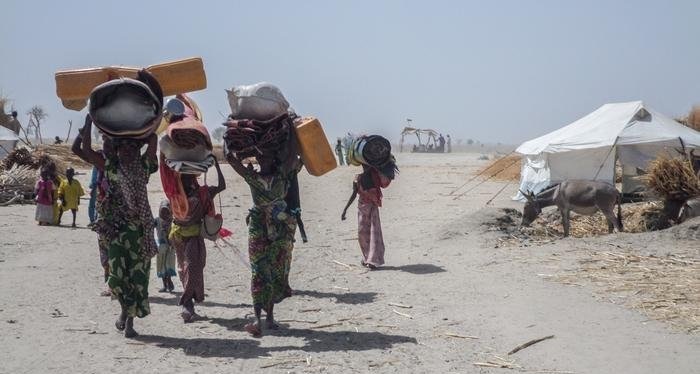
Nigeria now counts 3.7 million forcibly displaced people, UNHCR Africa says — a figure that puts the country among the worst-hit in West and Central Africa.
UNHCR’s West and Central Africa Regional Trends Report 2026 puts the region’s total displaced at about 20 million as of April 2026, down 4% from 20.7 million a year earlier. But that dip is not exactly a victory.
“While this decline is mainly due to returns to countries where conditions have become more stable, it does not signal a broader reduction in displacement pressures across the region,” the report said. Conflict remains the main driver. “Conflict and insecurity remained the primary drivers of displacement, increasingly compounded by extreme weather events and rising food insecurity,” the report said.
New displacement keeps coming: about 99,800 new refugees and asylum-seekers were registered between January and April 2026. Most displaced people — roughly 71% — are still inside their own countries, with around 14.2 million internally displaced persons recorded as of April 2026. The DRC hosts nearly 5.8 million IDPs, Nigeria 3.7 million, Burkina Faso nearly 2.1 million and Cameroon about 1 million.
Cross-border displacement is climbing fast. Refugees and asylum-seekers reached 3.9 million as of April 2026 — up 23% from 2025 and 18% since December 2024 — and over half have been displaced for five years or more. Chad hosts 1.5 million refugees (about 40% of the regional total); the DRC, Niger and Cameroon host 606,000, 447,000 and 432,000 respectively.
“UNHCR estimates nearly 932,000 people are stateless or at risk of statelessness across the region and the real figure is likely far higher,” the report showed. Women and children still make up 80% of refugees and asylum-seekers.
Earlier, UNHCR said it received $181,646,993 in contributions to support its work in Nigeria and the region, in its June report “UNHCR Projected Global Resettlement Needs 2025.”
