
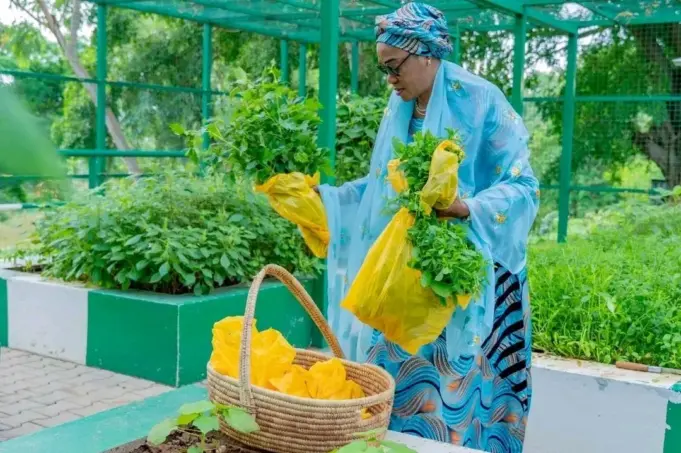
Nigeria’s First Lady, Senator Oluremi Tinubu, has renewed her call for Nigerians to grow food at home after harvesting vegetables from the Presidential Villa garden.
She urged families to take up home gardening as a simple way to improve food security and ease the impact of rising food prices.
The harvest took place on Monday at the Presidential Villa in Abuja as part of her Every Home A Garden initiative, which encourages families to grow vegetables in available spaces around their homes.
Information shared by the Nigerian Television Authority (NTA) on Tuesday said the garden is still producing different vegetables. The latest harvest included spinach, waterleaf and fluted pumpkin, nearly two years after the garden was established.
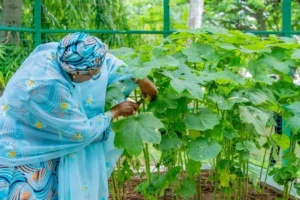
After the harvest, the First Lady shared some of the fresh vegetables with members of her staff.
She said the initiative also encourages a culture of sharing while giving families access to fresh, nutritious food grown at home.
Oluremi Tinubu has repeatedly described home gardening as a simple and practical way to improve household nutrition, cut food costs and strengthen food resilience, especially as many Nigerians continue to struggle with high food prices.
The Villa garden was unveiled in July 2024 under the Renewed Hope Initiative as a demonstration project to show that vegetables can be grown even in small residential spaces.
The Every Home A Garden campaign is aimed mainly at women and families. It also encourages them to make good use of available land around their homes to support their household food supply.
The renewed campaign comes just weeks after the First Lady faced nationwide debate over comments urging vulnerable Nigerians to start small businesses, including frying akara, roasting corn and producing kuli-kuli.
Speaking during an interview on her social investment programmes, she said such businesses required little start-up capital and added that the Federal Government was offering grants, not loans, to beneficiaries.
Her remarks drew criticism on social media, with many saying the advice showed a disconnect from the hardship facing millions of Nigerians. Others defended her, saying the comments were meant for low-income and vulnerable groups through empowerment programmes, not all Nigerians.
The reaction led to the now-viral nickname “Iya Alakara,” which gained more attention after President Bola Tinubu jokingly used it during the inaugural Presidential Press Corps Dinner at the State House.
The debate later returned after the Tinubu Media Centre shared an AI-generated image showing the First Lady selling akara.
