
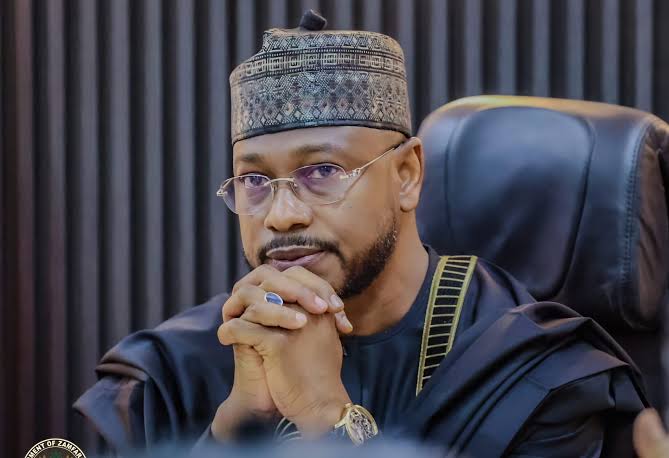
Zamfara State Governor Dauda Lawal has revealed that he turned down a N300 million ransom demand after kidnappers abducted his brothers in 2019, saying he refused to negotiate with the criminals because he did not want to encourage kidnapping for ransom.
He said paying ransom only gives criminal groups more reason to keep abducting innocent people.
Lawal made this known on Thursday at the ARISE News and THISDAY Townhall Conference in Abuja, where he again called for the creation of state police to help tackle insecurity across the country.
The governor recalled that the kidnappers demanded N300 million to free his brothers, but he refused to negotiate or pay them.
“My own brothers were kidnapped in 2019, and these criminals were demanding at the time about 300 million. And I said, look, I’m not going to pay a dime. If you like, go and kill them.”
He said the kidnappers later released his brothers after they spent about three months in captivity.
Lawal said the experience strengthened his belief that paying ransom only makes criminal groups stronger and encourages more kidnappings.
“By the time we continue to pay ransom to these people, we are encouraging them to be kidnapping people more and more.”
He added that kidnappers would lose interest if they knew they could not get money from victims’ families or governments. He insisted his position has never changed.
“I will not negotiate, and I will not pay ransom to any criminal, no matter what happens.”
The governor said governors should have operational control of security in their states if they are expected to protect lives and property. He noted that although governors are called chief security officers, they do not have the constitutional power to direct security agencies.
“In as much as I was called or I’m being called the chief security officer of the states, however, I don’t have the command and control structure to determine what happens or give instructions to some of these security officers.”
Lawal said this leaves governors accountable for insecurity without control over the police and other agencies.
He described security as the foundation of development and questioned why governors are held responsible without the authority to act.
“Why is it difficult for people to understand that my primary responsibility is the protection of lives and property, and I don’t have that control? How do you hold me accountable?”
He said state police would make governors more accountable because people could directly judge their performance. He also said states would be better placed to recruit, fund, equip and train security personnel based on their local security needs.
Lawal added that the Nigeria Police Force is struggling with poor funding, weak welfare and inadequate training, affecting officers’ morale and effectiveness.
He disclosed that Zamfara currently funds more than 30 per cent of security operations in the state. Over the past three years, the government has bought more than 500 operational vehicles for security agencies, as well as 35 Armoured Personnel Carriers (APCs) and Mine-Resistant Ambush Protected (MRAP) vehicles.
The governor also said his administration has introduced surveillance and attack drones to support security operations.
“We bought drones, both surveillance drones and attack drones, to be able to aid the security forces in terms of fighting these criminals in their respective areas.”
Lawal maintained that Nigeria should strengthen its security institutions through better funding, improved welfare, proper training and modern technology instead of negotiating with or paying ransom to armed groups.
His remarks come as discussions continue across the country on state police and wider security reforms, with supporters saying decentralised policing would improve accountability, intelligence gathering and faster responses to local security threats.
