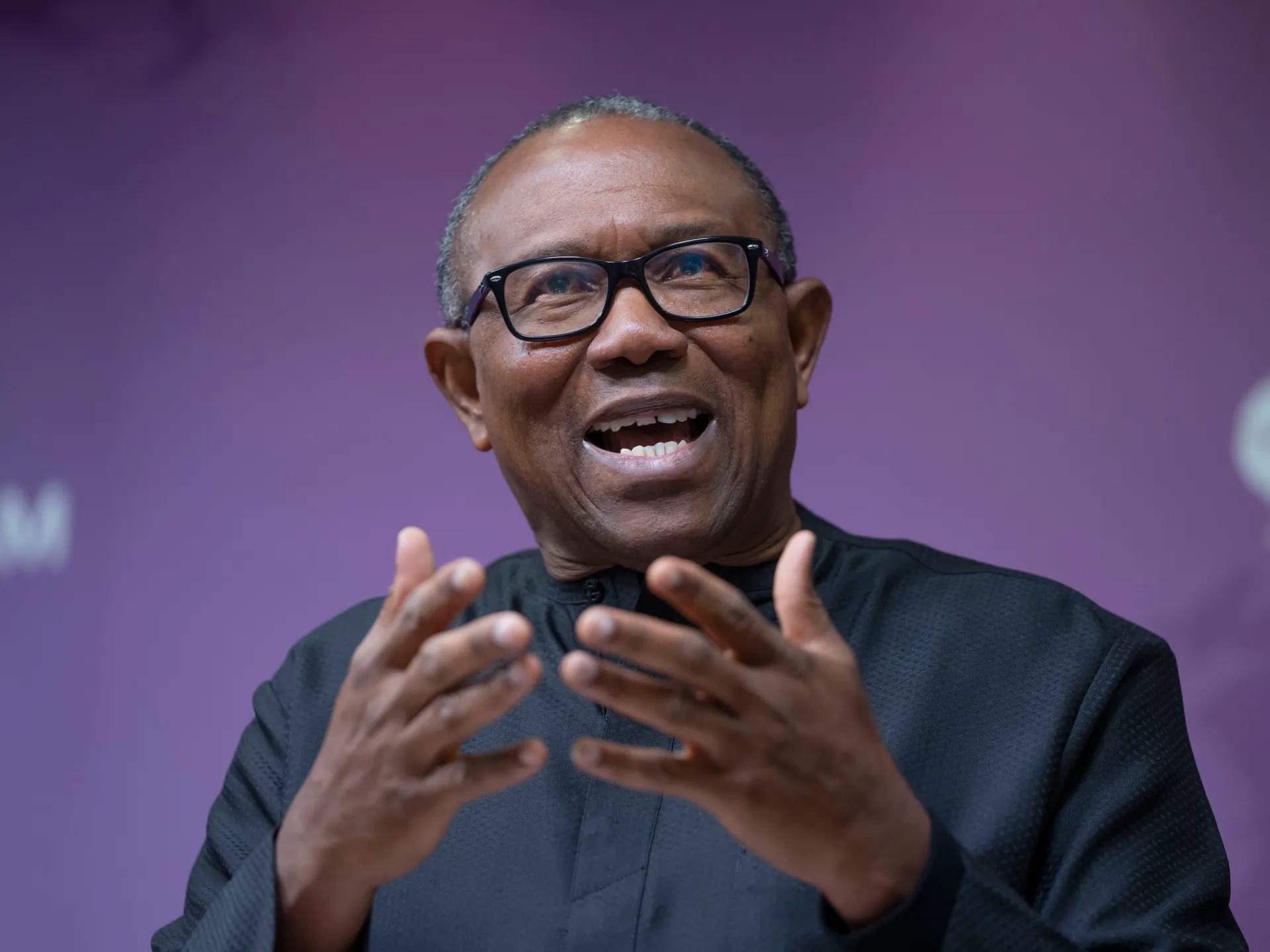
Peter Obi, the National Democratic Party (NDC) presidential candidate for the 2027 election, has urged that the planned creation of state police should wait until after the general election.
In a post on his X handle on Friday, Obi said there was no guarantee that the administration of President Bola Ahmed Tinubu would not use state police to influence the 2027 election if it is introduced now.
“Going by what Nigerians have seen so far, there is no guarantee that this administration can resist the temptation to take advantage of state policing to influence the 2027 general election by proxy. In view of that possibility and the danger it poses to the polity, it is necessary to defer its implementation until after the general election,” the NDC governorship candidate said.
Obi said the National Assembly’s passage of the State Policing Bill marked an important step toward meeting a long-standing demand by Nigerians.
“For years, many of us, alongside security experts and regional stakeholders, have consistently argued that a highly centralized policing structure is fundamentally unsuitable for a country as vast, diverse, and complex as Nigeria,” Obi said.
However, he argued that the bill was rushed through the National Assembly, raising valid concerns. He said there was no public hearing before its passage and repeated concerns that state police could be abused by governors.
“The process should involve greater community participation. Policing should be more visible at the local government and community levels. The mechanism for passing the law appears highly disorganised, with no public hearing on such a sensitive issue. Indeed, the rush to enact the law without proper legislative procedures fuels suspicion among many observers about the political motives behind it.
“The greatest concern does not arise from logistical issues; it stems from history. There is a widespread, justifiable fear that state police forces could become instruments in the hands of governors. The suspicion is that a state-controlled police force could be weaponised to suppress political rivals, disrupt opposition rallies, and manipulate elections,” the NDC presidential candidate said.
He added that to make state policing a real security solution, “the law must not only permit states to establish police forces but also clearly provide for independent oversight bodies, such as a state-level Police Service Commission that is entirely free from executive influence, to ensure that policing serves the public interest rather than the interests of the ruling elite.”
Both chambers of the National Assembly have passed the state police bill. It will only become law after it is approved by two-thirds of the state Houses of Assembly.
